
Our Products
Plant Protection
Tubex® Tree Shelters
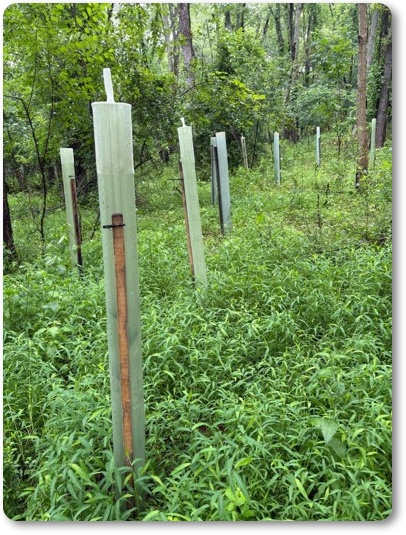 The Tubex tree shelter protects your container seedlings from deer, rabbits, chemical spray, and machinery as well as enhancing growth in early stage development. Standard, Combitube (vented), Shrub shelters and vole guards are available. Includes pre-threaded nylon ties. Stakes sold separately (see below). Best used with Octoraro container seedlings.
Tree Guards
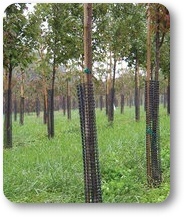
Rigid mesh tree trunk guards help prevent damage from buck rub, rodents, or equipment. Allows water to flow freely in flood prone sites. Available in 4’ height. Best used with Octoraro’s larger container size trees.
Wood Stakes
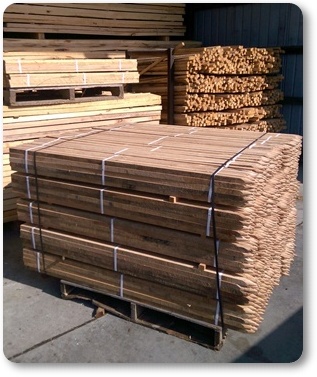
Wood stakes are used to secure both tree shelters and tree guards. We supply true 1” x 1” white oak stakes in 3’, 4’, and 5’ sizes. Stakes are sold in bundles of 25 or pallets of 1000. Fiberglass stakes are also available.
FAQ’s about Tree Shelters
Click here to download a helpful fact sheet on using tree shelters.
Should I use tree shelters for my seedling plantings? Research shows that using tree shelters can improve survival rates for your planting by 50% or more than plantings without shelters. Bottom line, if you have deer, voles or other wildlife and don’t protect your planting in some manner, you will likely experience significant losses.
Do the tree shelters come with bird netting? No, they are sold separately. It is important to remember to remove the bird netting once the tree has emerged from the top of the shelter as it may hinder development of the central leader.
Do the tree shelters come with prethreaded nylon ties? Yes. There are two nylon ties per tree tube that are pre-threaded for easy installation.
What size tree shelter do you recommend? The shelter height depends on what you are trying to protect against. If you are concerned about deer browse th
en a 5′ shelter is most effective. If you are protecting against rodent damage or mechanical devices then a shorter 4’ shelter is adequate.
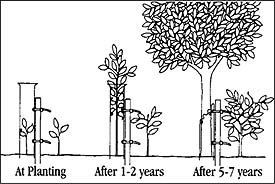
How long do I leave my tree shelter around the tree? It depends on the growth rate of the tree, but generally three to five years. We recommend protection until it reaches a minimum of 3” caliper at the base of the tree. Early removal increases risk of damage or death related to girdling, buck rub or browse.
Can I use tree shelters on larger trees? Tree shelters are generally designed for use with smaller container seedlings. However the shelters have a perforated seam that can be split and wrapped around a tree trunk. Tree branching must be higher than the height of the shelter however or pruning of side branches is required. We recommend tree shelters for our container seedlings and up to a #2 containers. We recommend mesh truck protectors for larger #5 or #7 container trees.
What is the best protection for larger trees? We recommend and sell rigid mesh trunk protectors for larger trees (#5 and #7 containers and caliper size plants). The greatest risk for trees this size is from buck rub and the trunk protectors decrease risk of serious damage. 4’ tall trunk protectors are stocked. 5’ trunk protectors are special order only.
Do the tree shelters break down from the UV rays of sunlight? Although the tree shelter will eventually break down in sunlight, our experience shows that the shelter will need to be removed from the tree to prevent damage from girdling before it breaks down. There is a perforated seam to make this process easy and safe.
Do you recommend shelters for shrubs? Yes. Unprotected shrubs are at high risk for deer browse. We stock and sell 2’ shrub shelters. Some entities are also experimenting with taller shelters with no adverse effects. Other forms of protection such as deer fence may also be utilized for shrub protection.
How else can I use it to improve my planting survival rates? In addition to the tree shelter, controlling the herbaceous layer around your plants with stone or wood mulch, mowing, or herbicide treatments can improve survival rates up to an additional 30%. These best management practices reduce the habitat for rodents around your planting. A 3′ diameter control area is recommended to discourage voles.